





Dubai is known for impressive architecture, luxurious interiors, landscaped developments and beautifully designed outdoor spaces. From hotels and shopping malls to offices, restaurants, villas and commercial developments, greenery plays an important role in creating an attractive and welcoming environment. For many projects, artificial trees in Dubai provide a practical way to add greenery where natural trees may be difficult to maintain.
Natural trees and plants remain an important part of Dubai’s urban landscaping. However, maintaining live greenery in a hot and demanding climate can require regular irrigation, pruning, fertilisation, pest control and professional maintenance. This has led many property owners, interior designers, architects and businesses to consider artificial trees as a visually appealing, low-maintenance alternative.
High-quality artificial trees can provide the appearance of natural greenery while requiring significantly less day-to-day maintenance.
Dubai’s climate presents unique challenges for landscaping. High temperatures, strong sunlight, dust, wind and limited natural rainfall can make maintaining certain types of natural plants and trees challenging.
Natural landscaping can be highly successful when the right species, irrigation systems and maintenance programmes are used. However, not every location is suitable for natural trees. Indoor spaces, shaded areas, high-traffic commercial environments, temporary installations and locations where regular irrigation is difficult can benefit from artificial greenery.
Artificial trees offer a way to introduce a strong visual connection with nature without the ongoing requirements associated with maintaining living plants.
One of the biggest advantages of artificial trees is their low-maintenance nature. Unlike natural trees, artificial trees do not require:
Routine cleaning and occasional inspection are generally sufficient to keep a good-quality artificial tree looking attractive. For commercial properties such as hotels, restaurants, offices, shopping centres and retail spaces, this can make artificial trees particularly convenient.
Water management is an important consideration in any landscaping project in the UAE. Natural trees require an appropriate water supply to remain healthy, with requirements varying according to the species, location, soil conditions and season.
Artificial trees do not require irrigation. This makes them particularly useful for indoor areas, reception spaces, shopping malls, restaurants, offices, event venues, hotel interiors and areas where irrigation is difficult to install.
Natural trees change as they grow and respond to environmental conditions. Leaves may fall, branches may require pruning, and plants can experience stress from heat, pests or insufficient water. Artificial trees provide consistent greenery throughout the year.
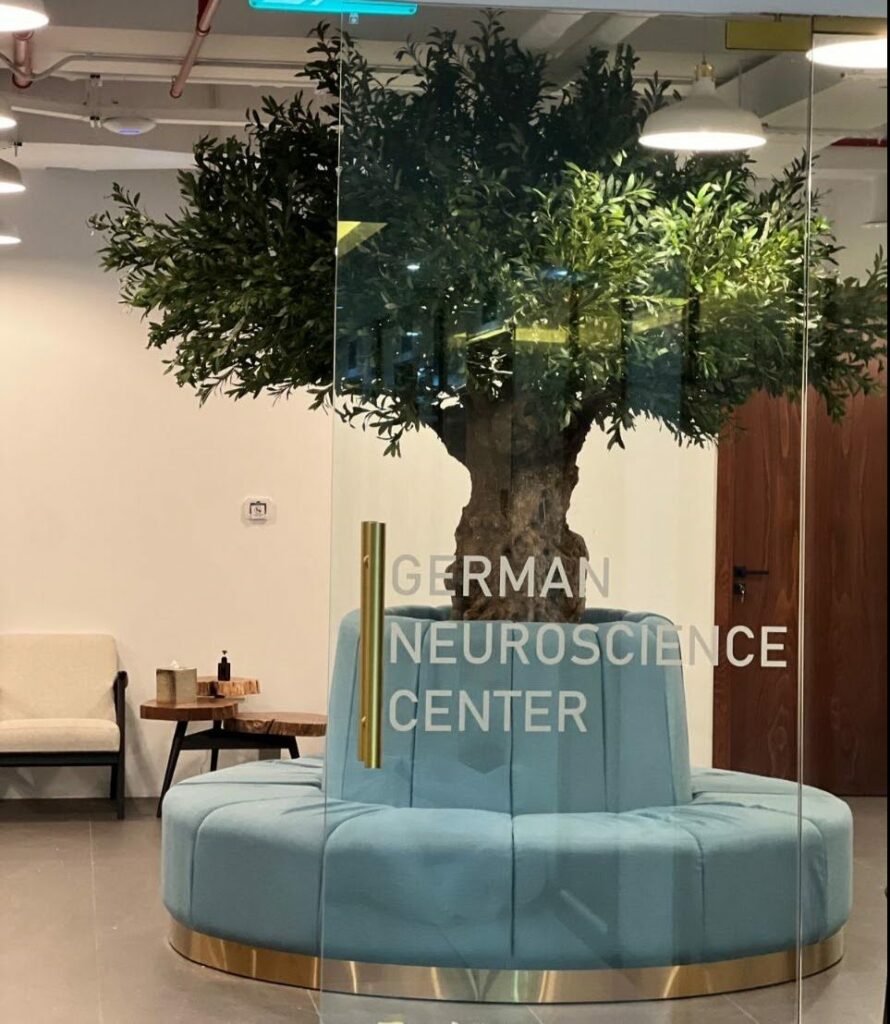
A professionally manufactured artificial olive tree, Ghaf tree, palm tree or other bespoke tree can maintain its intended appearance without seasonal changes. This is especially valuable for businesses that want their landscaping to remain visually consistent for customers, visitors and guests.
Artificial trees are extremely versatile. For indoor applications, they can be used to enhance hotel lobbies, office receptions, shopping malls, restaurants, cafes, showrooms, residential interiors, salons and spas.
For suitable outdoor applications, specially manufactured trees should be designed with weather-resistant and UV resistant artificial trees outdoor specifications. When selecting an artificial tree for an outdoor location in Dubai, it is important to specify products designed for exposure to sunlight, heat, wind and other environmental conditions.
One of the major advantages of artificial trees is the ability to customise the design. Instead of selecting a standard-size tree, bespoke artificial trees in the UAE can be manufactured according to the requirements of a specific project.
This is particularly useful for architectural and landscaping projects where the tree must complement the surrounding design. For example, a 6-metre bespoke artificial olive tree can be designed as a prominent architectural feature in a hotel, commercial development, entrance area or luxury residence.
Artificial trees are not simply replacements for natural plants. They can also become architectural design elements. A large artificial tree can be used to create a focal point in a lobby, entrance, atrium, restaurant, courtyard or outdoor terrace.
Large bespoke trees are particularly effective in commercial environments where a strong visual statement is required.
Maintaining natural plants in a busy commercial environment can be challenging. Shopping malls, hotels, restaurants, offices and retail outlets may have thousands of visitors every day. Large artificial trees for commercial spaces can provide a more predictable decorative solution while reducing disruption caused by pruning, watering, soil maintenance or replacing unhealthy plants.
The quality of an artificial tree is only one part of a successful installation. Large artificial trees should also have an appropriate fixation and stabilisation system, particularly when installed in high-traffic areas or outdoors.
For large bespoke trees, the fixation method should be designed according to the tree’s height, weight, location, wind exposure and surrounding construction. A professionally engineered installation helps ensure that the artificial tree is stable, secure and integrated properly into the project.
Artificial trees should not necessarily be viewed as a replacement for every natural tree. Natural trees provide genuine ecological benefits, including shade, habitat and contributions to urban biodiversity. Instead, artificial trees are best viewed as an alternative landscaping solution for locations where natural trees may not be practical.
| Feature | Artificial Trees | Natural Trees |
|---|---|---|
| Watering | Not required | Required |
| Pruning | Minimal | Regular |
| Fertiliser | Not required | Usually required |
| Pest control | Not required | May be required |
| Growth | Fixed appearance | Continues growing |
| Appearance | Consistent year-round | Changes naturally |
| Indoor use | Excellent for suitable products | Depends on species and conditions |
| Customisation | Highly customisable | Limited |
| Installation | Can be engineered for specific locations | Requires soil/root environment |
| Long-term maintenance | Generally low | Ongoing |
Not all artificial trees are manufactured to the same standard. When selecting an artificial tree for a Dubai project, consider the following points.
UV resistance
For outdoor installations, UV-resistant foliage is important because prolonged exposure to sunlight can affect inferior materials.
Material quality
High-quality foliage and realistic trunk construction can make a significant difference to the overall appearance.
Structural strength
Large trees should have an internal structure capable of supporting the trunk and branches while remaining stable after installation.
Fire performance
For hotels, offices, malls, restaurants and other commercial environments, project-specific fire-rating requirements should be considered.
Installation requirements
Determine whether the tree will be installed inside a planter, directly onto a finished floor or onto a structural base plate.
Realistic appearance
The most convincing artificial trees combine realistic foliage, natural branch distribution, detailed trunks and carefully designed proportions.
For Dubai property owners, architects, interior designers, landscapers and businesses, artificial trees offer a practical way to introduce greenery into spaces where natural trees may not be suitable.
Their low maintenance, consistent appearance, design flexibility and suitability for indoor applications make them an increasingly useful landscaping option. For outdoor applications, quality matters. UV resistance, weather-resistant materials, structural stability, fire performance and professional fixation should all be considered before installation.
Whether you are looking for a realistic artificial olive tree, Ghaf tree, palm tree, ficus tree or a completely bespoke design, the right artificial tree can transform a space while reducing the ongoing maintenance associated with living greenery.
Looking for bespoke artificial trees in Dubai? Choose a design that matches your project architecture, space and environmental requirements, and work with an experienced supplier to ensure the tree is manufactured and installed to the required standard. Contact Shajara to discuss an artificial tree solution for your project.
Yes. Artificial trees are suitable for Dubai interiors such as hotel lobbies, offices, restaurants, malls, villas and reception areas when the product quality, scale and design match the space.
Artificial trees are useful where natural trees are difficult to maintain because of limited irrigation, indoor conditions, heat, dust, high foot traffic or restricted maintenance access.
Yes, but outdoor artificial trees should be specified with suitable UV-resistant and weather-resistant materials. The installation method should also consider wind exposure, stability and the project location.
Yes. Bespoke artificial trees can be customised by height, canopy size, trunk design, foliage density, planter style and fixation method for hotels, malls, restaurants, offices and luxury residences.