






Dubai is renowned for its luxurious architecture, spectacular waterfront properties, and exceptional outdoor living spaces. From elegant villa gardens to beachfront restaurants and five-star hotel terraces, greenery plays an important role in creating inviting, sophisticated environments. However, the UAE’s intense sunlight, high temperatures, dust, and coastal conditions can make maintaining beautiful outdoor landscaping a challenge.
UV-resistant artificial olive trees in Dubai offer a refined Mediterranean aesthetic with reduced maintenance and foliage specifically selected for outdoor exposure. With bespoke designs, customized trunks, and realistic olive-green foliage, these statement trees can transform outdoor spaces into elegant, year-round destinations.
For broader guidance on commercial outdoor greenery, see Shajara’s UV-resistant artificial plants guide for UAE buildings. This article focuses specifically on olive trees, outdoor placement and bespoke project specification.
Olive trees are celebrated for their sculptural branches, silvery-green leaves, and timeless Mediterranean character. Their distinctive appearance complements contemporary architecture, natural stone finishes, neutral palettes, and luxury outdoor furniture.
In Dubai, however, ordinary artificial trees may fade, become brittle, or deteriorate when exposed to prolonged direct sunlight. Purpose-made UV-resistant artificial olive trees are designed to offer improved resistance to ultraviolet radiation and help preserve their colour and appearance.
The key benefits include:
UV resistance does not mean completely fade-proof. Product specifications, exposure levels, and installation conditions all influence long-term performance.
The trunk is one of the most important features of a realistic artificial olive tree. A carefully crafted trunk gives the tree its character, creating the impression of a mature specimen shaped by years of natural growth.
For premium UAE projects, bespoke trunks can be designed with irregular contours, textured bark, sculptural branches, and carefully finished surfaces. Depending on the design and manufacturing method, options may include treated natural timber or handcrafted artificial bark.
Every tree can be developed to complement its surroundings, whether the brief calls for a rustic Mediterranean appearance or a more contemporary architectural statement.
Customisation options may include:
This level of personalisation is particularly valuable for luxury hotels, private villas, branded restaurants, and architectural landscaping projects where standard catalogue trees may not achieve the desired result.
For a wider range of custom tree options, visit Shajara’s bespoke artificial trees service.
1. Beachfront Restaurants and Sea-View Terraces
Olive trees introduce Mediterranean charm to beachfront dining spaces, complementing natural stone, timber furniture, soft lighting, and coastal views.
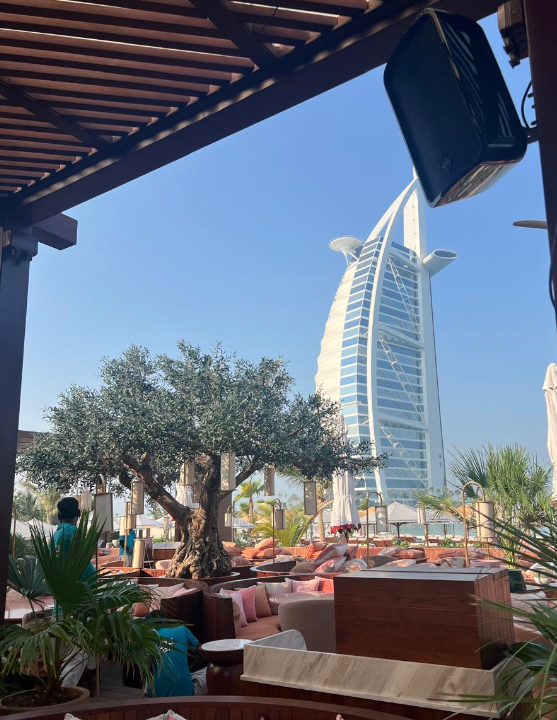
For a restaurant overlooking the Burj Al Arab, a bespoke olive tree can become a distinctive focal point without competing with the surrounding architecture or sea view. The tree’s silhouette, canopy size, and positioning can be designed to frame the setting and enhance the guest experience.
In coastal locations, the specification should also account for salt exposure, wind conditions, secure fixing, and suitable outdoor-grade materials.
2. Luxury Villas and Private Gardens
Artificial olive trees work beautifully beside swimming pools, outdoor lounges, entrance courtyards, and covered patios. Their sculptural form creates visual interest without the irrigation and horticultural care associated with living trees.
Custom planters and coordinated foliage arrangements can help integrate the trees into a villa’s existing architectural style.
3. Hotels and Hospitality Developments
Hotels and resorts require consistently attractive surroundings for guests, photography, events, and everyday operations. Bespoke artificial olive trees can provide permanent decorative greenery in selected outdoor areas where living plants may be difficult to maintain.
For exposed installations, the complete tree—not just its foliage—should be specified for the intended conditions. This includes structural support, base stability, planter weight, and anchoring.
4. Rooftop Lounges and Pool Decks
Rooftop spaces offer outstanding views but can expose decorative trees to intense sunlight and strong winds. UV-resistant foliage, appropriate structural design, and secure installation are essential when specifying large artificial olive trees for these locations.
For related rooftop and pool-deck considerations, see artificial trees for hotel pool decks and rooftop hotels in Dubai.
Careful placement can create privacy, define seating zones, and soften contemporary architectural finishes without obstructing important views.
Choosing the right tree involves more than selecting realistic leaves. Outdoor installations should be assessed according to their actual exposure and intended use.
Selecting a purpose-made outdoor product is preferable to placing an indoor decorative tree in direct sunlight and assuming that a surface spray will provide lasting protection.
There is no single lifespan that applies to every artificial olive tree. Longevity depends on foliage quality, UV exposure, heat, wind, dust, coastal conditions, and maintenance.
A tree installed beneath a covered terrace may experience very different conditions from one placed in an exposed, south-facing garden. Buyers should request product-specific performance information, warranty terms, and recommendations for the intended installation location.
Regular gentle cleaning also helps maintain the tree’s appearance. Dust can be removed using a soft brush or damp cloth, following the manufacturer’s care instructions. Periodic inspections of branches, bases, and fixings are advisable for outdoor installations.
A successful bespoke installation begins with the design brief. Architects, interior designers, landscape consultants, and property owners should consider the following:
For prominent hospitality projects, a reference photograph or site image can help the design team develop a tree that complements the architecture and surrounding landscape.
A standard product can also help with early visual review, such as Shajara’s Artificial Olive Tree 180cm. Outdoor suitability should still be confirmed for the specific site and exposure.
A luxury sea-view setting calls for greenery that enhances the experience without overwhelming the scenery. A bespoke artificial olive tree can introduce a Mediterranean atmosphere to a beachfront restaurant, hotel terrace, or private outdoor lounge while keeping ongoing maintenance requirements low.
The most successful designs balance realistic trunk craftsmanship, natural-looking foliage, appropriate scale, and a secure installation. Where the tree is exposed to Dubai’s sun and coastal weather, selecting suitable outdoor-grade materials from the beginning is essential.
The result is a carefully considered landscape feature that complements the setting and helps create an elegant, memorable environment for residents and guests.
Whether you are designing a luxury villa, a beachfront restaurant, a hotel terrace, or a premium commercial landscape, bespoke UV-resistant artificial olive trees can bring Mediterranean character to outdoor spaces across Dubai and the UAE.
Choose a design that combines realistic craftsmanship, suitable outdoor materials, and project-specific engineering to achieve a beautiful, practical, and long-lasting installation.
Looking for bespoke artificial olive trees in Dubai? Discuss your project dimensions, preferred trunk style, foliage requirements, planter design, and site exposure with a specialist artificial greenery supplier to develop a solution tailored to your space.
For a project quotation or site-specific recommendation, contact Shajara’s project consultants with the intended location, dimensions, exposure conditions and preferred olive-tree style.
Yes, provided the selected model is specifically designed for outdoor exposure and its technical specifications suit the site’s sunlight, heat, wind and coastal conditions.
Yes. Depending on the supplier, bespoke options can include tree height, canopy width, branch arrangement, trunk texture, foliage density, planter design and installation details.
They require much less care than living olive trees, but occasional cleaning and inspection are still recommended to remove dust and check the stability of the installation.
Ask for confirmation of outdoor suitability, UV testing or supporting documentation, warranty coverage, trunk and base construction, wind-fixing recommendations and any applicable fire-performance certificates.


