







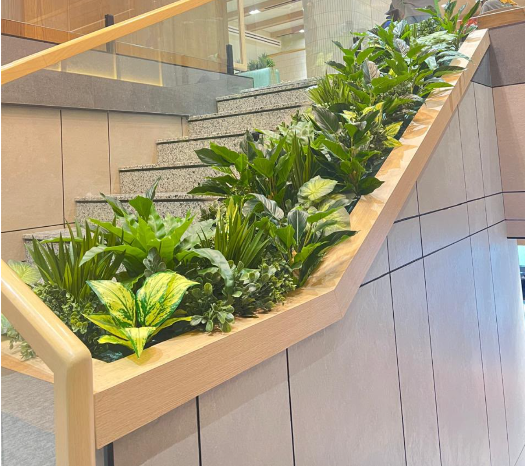
Artificial plants for planters offer a practical way to introduce greenery into UAE homes and commercial spaces without the challenges associated with extreme heat, limited water and demanding maintenance. High-quality artificial alternatives can provide a natural-looking finish throughout the year while requiring only occasional cleaning and care.
This guide explains how to select artificial plants for planters, choose suitable materials and proportions, coordinate plants with different design styles, and create bespoke arrangements for residential and commercial settings across the UAE.
The UAE’s environmental conditions create specific challenges for traditional greenery. Intense sunlight, high temperatures, humidity and occasional sandstorms can make live plants difficult and costly to maintain, particularly in exposed outdoor areas.
Modern artificial plants can address these conditions when they are manufactured for the intended environment. For sun-exposed areas, choose products made with UV-stabilised materials and confirm whether they are rated for outdoor use. Shajara’s sun-resistant artificial plants are designed for demanding UAE conditions and are available in different sizes and styles.
The lifespan of an artificial plant depends on its materials, level of UV protection, installation location and exposure to direct sunlight. Premium indoor arrangements can remain attractive for many years, while outdoor products should be selected according to the supplier’s stated warranty and suitability for weather exposure.
Artificial greenery is one of the most versatile choices for planter arrangements. Quality products feature durable leaves, stable stems and realistic textures that retain their form without watering, sunlight or routine pruning.
Potted artificial plants arrive ready for placement, making them suitable for balconies, villas, terraces, offices, hotels, restaurants and retail spaces. Shajara’s artificial plants and trees collection includes compact plants, palms, statement trees and decorative foliage for a variety of applications.
Artificial flowers can add colour and seasonal character to an arrangement, especially in shaded or semi-covered areas. Artificial green wall panels are another option for creating density, texture and a strong visual backdrop without the maintenance required by living walls.
For larger vertical installations, explore Shajara’s artificial green wall solutions, which can be customised for homes, offices and commercial interiors.
Artificial plants remove many of the maintenance requirements that can make live greenery impractical in UAE conditions. They do not need watering, fertilising, trimming, soil management or pest control. Instead, they generally require scheduled cleaning and occasional inspections.
They can also reduce recurring replacement and maintenance costs. Unlike live plants, artificial arrangements do not wilt or depend on seasonal growing conditions, which makes them useful where a consistent appearance is important.
Placement flexibility is another major advantage. Artificial plants can be installed in dim corners, air-conditioned offices, interior corridors, basement retail units and other spaces where natural light is limited. Outdoor use is also possible when the chosen foliage and planter system are designed for sun, heat and weather exposure.
The size and character of the space should guide plant selection. Open areas and rooms with high ceilings can accommodate larger pieces such as fiddle leaf figs, olive trees or bird of paradise plants. These arrangements add height and visual volume without making the space feel crowded.
Smaller spaces may benefit from compact plants, hanging varieties or narrow trees that create impact without taking up too much floor area. For more residential styling ideas, see Shajara’s guide to artificial plants for home decor.
Furniture scale and traffic flow should also be considered. A slim olive tree can complement a sofa or reception area, while compact foliage may suit side tables, shelves and smaller seating zones. In commercial settings, plants should not obstruct pathways, signage, doors or emergency access.
Measure the artificial plant and its existing base before selecting a decorative planter. The container should be proportionate to the height and width of the foliage and should provide enough depth to hold the plant securely.
Tall or broad arrangements usually require a wider and heavier base, particularly in entrances, terraces and high-traffic commercial spaces. Avoid planters that look too small for the canopy or arrangements that feel top-heavy when gently tested for stability.
For bespoke installations, planter dimensions should be confirmed after considering total height, canopy width, placement, visibility and stability requirements. Decorative materials can then be added around the internal base to create a finished, natural appearance.
High-quality artificial plants are distinguished by natural-looking leaves, stems and flowers. Look for varied leaf tones, realistic veining, matte finishes and subtle texture rather than overly glossy surfaces or identical repeated foliage.
The material specification should match the location. Outdoor arrangements need UV-stabilised foliage, while certain commercial projects may require fire-performance documentation. Shajara supplies Fire Safe and Sun Safe artificial plants that are tested or manufactured for specific safety and exposure requirements.
Ask the supplier for relevant product details, test certificates or warranty information rather than assuming that every artificial plant is suitable for direct sunlight or regulated commercial interiors.
Modern interiors often pair well with matte black, concrete or angular ceramic planters. Traditional spaces may suit glazed ceramics, brushed metal or warm cream finishes, while rustic environments can work with terracotta, woven baskets or galvanised metal.
Minimalist settings generally benefit from restrained planter colours that allow the foliage to remain the focal point. Consider nearby flooring, furniture, wall finishes and brand colours so that the arrangement feels integrated rather than added as an afterthought.
Bespoke arrangements allow each element to be adapted to the project, including species, foliage density, overall height, canopy width, colour palette and installation method. This approach is useful where standard off-the-shelf plants do not match the dimensions or visual identity of the space.
Shajara’s project consultants can develop arrangements for private residences, hotel lobbies, restaurants, retail environments, offices and large commercial spaces. The company’s bespoke artificial tree service also allows the height, foliage species, trunk finish and canopy shape to be tailored to project requirements.
The design process can include a review of site dimensions, interior or exterior exposure, style references, safety requirements, planter finishes and installation access. These factors help ensure that the final arrangement looks appropriate and performs well in its intended location.
Custom planters can be selected or manufactured to complement the arrangement and surrounding architecture. Available options may include ceramic, fibreglass, metal, stone-effect and other specialist finishes, depending on the design and placement requirements.
For branded commercial environments, planter colours, finishes and graphics can be coordinated with the wider interior concept. The plant, planter and installation method should be treated as one complete design rather than as separate purchases.
Shajara, a brand of JCS Artificial Flowers and Plants Trading LLC, supplies artificial plants, bespoke trees, green walls and project solutions across the UAE and the wider GCC. Its consultants support both residential and commercial projects, from product selection to customised design and installation.
The range includes artificial species in different sizes, shapes and styles, along with Sun Safe and Fire Safe options for projects with specific performance requirements. You can also view Shajara’s completed artificial plant and bespoke tree projects to see how customised greenery has been used in malls, hotels, restaurants, offices and other prominent spaces.
Working with a specialist supplier is particularly valuable for large planters, complex layouts and commercial installations where scale, safety, access and long-term presentation all need to be considered.
Dust artificial plant leaves every one or two weeks, depending on their location and exposure. Arrangements near windows, entrances, kitchens, air vents or outdoor areas may need more frequent attention.
Use a soft-bristled brush or microfibre cloth, working from the upper leaves downwards. For plastic foliage, wipe gently with a damp cloth and plain water. When a deeper clean is required, use only a few drops of mild soap in cool water, provided this is permitted by the manufacturer’s care instructions.
Avoid harsh detergents, abrasive products and excessive force, as these can damage the finish, colouring or adhesives. After wet cleaning, remove excess water carefully and allow the arrangement to dry fully in a well-ventilated area before repositioning it.
Artificial plants for planters provide a practical, low-maintenance way to introduce lasting greenery into UAE interiors and outdoor spaces. The best results come from choosing suitable materials, realistic textures, balanced proportions and planters that complement the surrounding design.
For exposed locations, prioritise UV-rated products. For commercial environments, confirm any required fire-performance documentation. Where standard arrangements do not suit the space, a bespoke solution can bring together the plant, planter and installation requirements in one coordinated design.
Planning an artificial plant arrangement for your home, office, hotel, restaurant or retail space? Speak with Shajara’s project consultants to explore bespoke foliage combinations, custom planters and installation solutions tailored to your space.
Yes, but the foliage and supporting materials should be specifically designed for outdoor exposure. Confirm UV resistance, weather suitability and the supplier’s warranty before placing an arrangement in direct sunlight.
Consider the plant’s total height, foliage width, internal base and stability. Larger arrangements generally require wider and heavier planters, especially in entrances, terraces and high-traffic areas.
Yes. Bespoke arrangements can include customised plant species, foliage density, dimensions, planter finishes, colour schemes and branding. The specification should be developed around the space and intended use.
Light dusting every one or two weeks is suitable for many indoor settings. Plants near entrances, windows, kitchens, air vents or outdoor areas may require more frequent cleaning.